

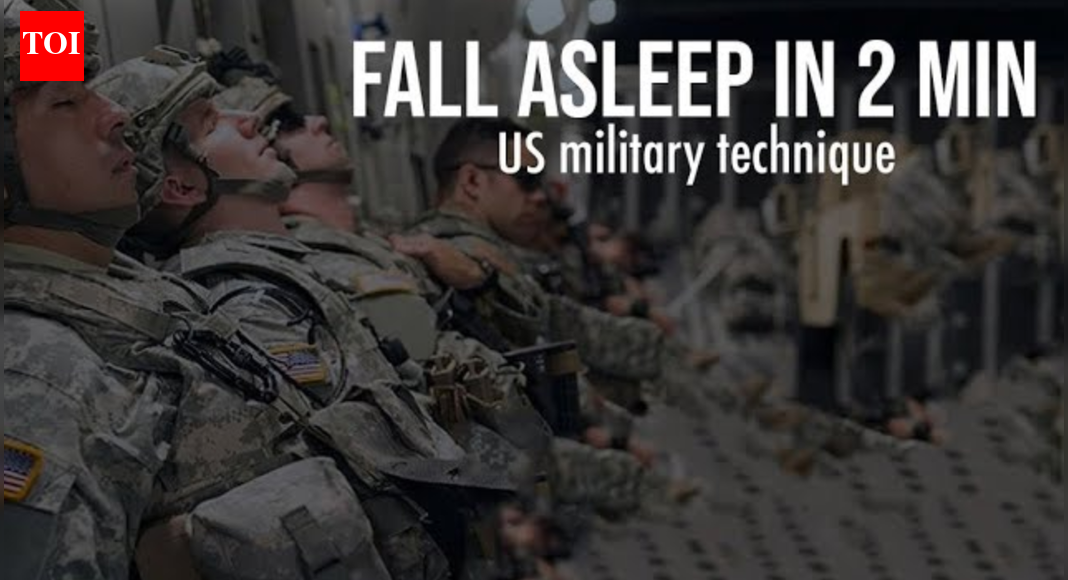
Introduction to the Military Sleep Method
The military sleep method is a relaxation technique that has been making rounds on social media, claiming to help individuals fall asleep in under two minutes. This method is not new and has its roots in a system developed by Lloyd "Bud" Winter, an Olympic sprint coach who studied sports psychology. Winter’s relaxation protocol was designed to help pilots fall asleep quickly, even in loud and stressful wartime conditions.
Where the Military Sleep Method Really Comes From
The technique was first described in Winter’s book "Relax and Win: Championship Performance" (1981), where he outlined a system he helped develop for the United States Navy Pre-Flight School during the Second World War. The goal was not "wellness" but survival and performance, as pilots were struggling with stress and sleep deprivation. Winter’s relaxation protocol was supposed to help airmen fall asleep quickly, despite the circumstances.
How the Military Sleep Method Actually Works
The method is essentially a full-body, top-to-toe relaxation sequence plus a mental reset. It’s meant to take about 120 seconds to run through, with the final ten seconds focused on clearing your mind. The sequence involves:
- Getting physically comfortable and slowing down your breathing
- Relaxing the face, including softening the forehead, unclenching the jaw, and releasing the muscles around the eyes
- Dropping the shoulders and loosening the neck, letting the upper body sink into the mattress
- Relieving tension in the arms, hands, and fingers
- Relaxing the torso and lower body, including the chest, abdomen, pelvis, thighs, calves, ankles, and toes
- Clearing the mind for about ten seconds, either through visualization or a short internal mantra
What Sleep Experts Say the Method is Really Doing
Sleep experts say that the military sleep method is built on relaxation tools that have evidence behind them, including deep breathing, progressive muscle relaxation, biofeedback, and visualization. While there is no specific evidence proving the efficacy of the military sleep method, these individual components have been shown to promote sleep and relaxation. Deep breathing can calm the nervous system, slow heart rate, and trigger melatonin production. Progressive muscle relaxation can reduce insomnia symptoms and ease anxious thoughts. Biofeedback-style awareness can help individuals control their arousal levels at bedtime. Visualization can reduce distress from intrusive thoughts and help individuals fall asleep more quickly.
The Effectiveness of the Military Sleep Method
The military sleep method may be helpful for individuals whose insomnia is mainly caused by a restless body and a racing mind at bedtime. However, it’s essential to note that not everyone’s sleep problems can be solved by relaxation alone. Underlying conditions such as sleep apnea, restless legs, chronic pain, severe anxiety, and depression may require more comprehensive treatment. If you’re one of the many adults who struggle to fall asleep, a structured wind-down routine like the military sleep method can be a useful tool to help you relax and prepare for sleep.
Conclusion
The military sleep method is a relaxation technique that has been repackaged for civilians, claiming to help individuals fall asleep in under two minutes. While it’s not a miracle hack, it’s a compact relaxation routine that pulls several evidence-based strategies into one script. By relaxing the face, dropping the shoulders, scanning down the body, and giving your thoughts something gentle to hold onto, you can create a clear and repeatable script to help you fall asleep. Remember that the military sleep method is not a replacement for comprehensive treatment of underlying sleep disorders, but it can be a useful tool to help you relax and prepare for sleep.